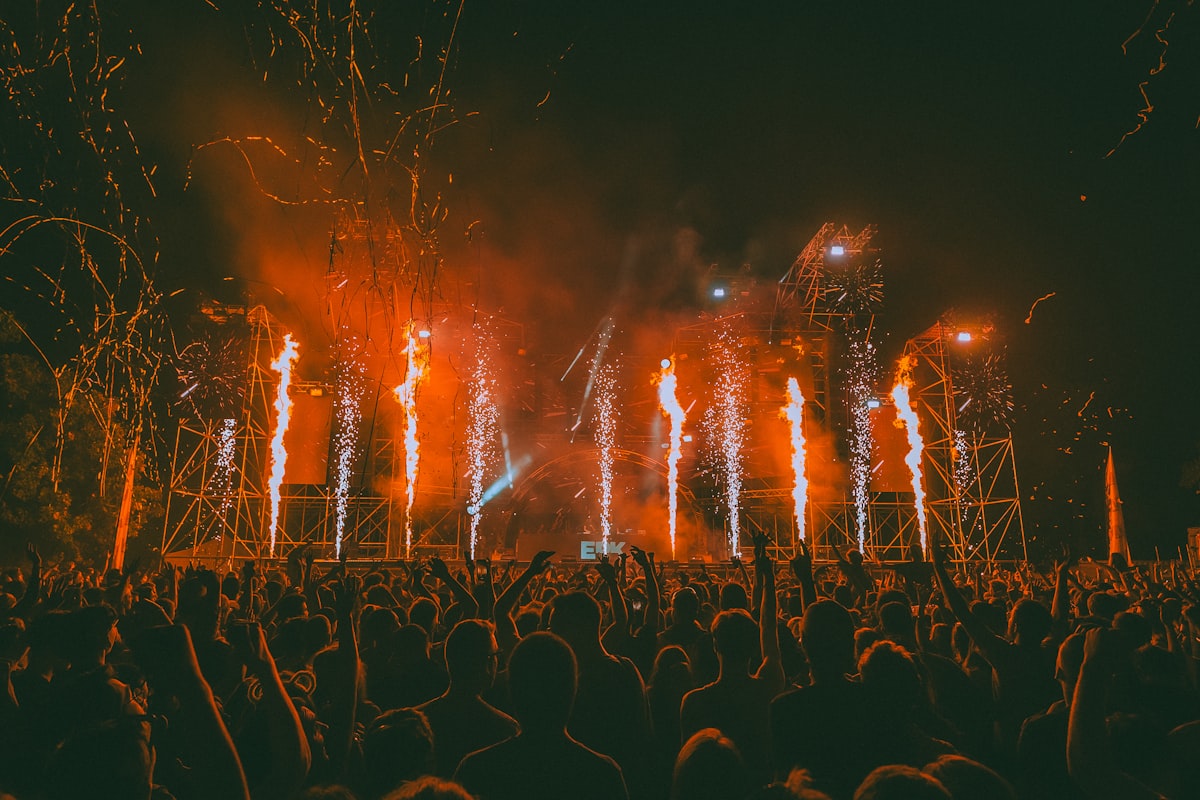
You arrive with your people and leave feeling oddly close to a few hundred strangers. That's not just the night talking. Moving in time with a crowd does something measurable.
Sync up, bond up
In a 2015 experiment, people who danced in synchrony — rather than out of step — felt more bonded to each other and showed a higher pain threshold, which researchers use as a marker of the body's own endorphins. Both the syncing and the physical effort contributed, independently. A 2016 follow-up on an actual silent-disco dancefloor found the same thing: dancing in time left people feeling closer.
Singing together works fast, too. A study tracking groups over several months found that singing groups bonded more quickly early on than other kinds of groups — an "ice-breaker effect." It's the thing you feel when a whole field sings the same line back at the stage.
Moving in time blurs the line between you and the crowd — and the effort releases the body's own feel-good chemistry.
These are the nights that don't photograph well and matter most: the warehouse at 3am, the field at sunset, the strangers who became the night. Chord is built to keep the part a photo misses — the track, the mood, and who you were with — even when there was nothing worth filming.